
Best Supplements for Menopause Brain Fog
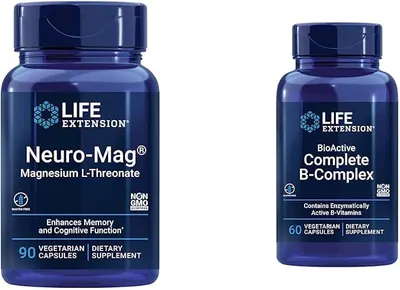
Life Extension Neuro-Mag Magnesium L-Threonate
Best overall — the only supplement targeting menopause-related synaptic decline with clinical cognitive data, and the only brain-targeted magnesium form worth paying for.
- Magtein (magnesium L-threonate) — the only form that reliably crosses the blood-brain barrier
- Clinical dose: 2,000mg L-threonate daily (144mg elemental magnesium)
- Backed by MIT-developed formula with peer-reviewed cognitive data
The strongest evidence for menopause brain fog supports magnesium L-threonate (Life Extension Neuro-Mag) for synaptic function, omega-3 DHA (Nordic Naturals Ultimate Omega) for membrane fluidity and inflammation, and Rhodiola rosea for mental fatigue. Estrogen loss during menopause reduces brain glucose uptake, synaptic plasticity, and serotonin availability — these supplements address different pathways affected. Lion’s mane and phosphatidylserine round out the stack for women who need deeper cognitive support, but they work best as additions rather than standalone picks.
We reviewed the clinical literature on menopause-related cognitive changes and the supplement categories with meaningful human data. Below are the five supplements that earned their place — picked for evidence quality, relevance to the actual mechanisms behind menopausal brain fog, and reasonable safety profiles in adults over 50.
Important: Menopause brain fog is temporary for most women — research suggests cognitive function stabilizes and often partially recovers in postmenopause. These supplements may help you feel more functional during the transition, but they are not treatments for dementia or cognitive decline. If your memory problems are severe, progressive, or affecting your ability to work or manage daily tasks, talk to your doctor about a thorough evaluation — and see our broader Menopause Supplement Guide for the wider toolkit.
Key Takeaways
- Magnesium L-threonate (Neuro-Mag) is the only magnesium form that crosses the blood-brain barrier — clinical dose 2,000mg L-threonate daily
- Omega-3 DHA supports brain membrane fluidity — target 1,000mg combined EPA+DHA daily from a triglyceride-form fish oil
- Rhodiola rosea is the fastest-acting — noticeable mental clarity in 1-2 weeks for mental fatigue patterns
- Brain fog stabilizes in postmenopause — most cognitive changes during the transition are temporary, not progressive
- Sleep quality drives 50-70% of perceived cognitive symptoms — fix sleep first if night sweats fragment it
- HRT has the strongest cognitive evidence when started within 10 years of menopause onset — discuss with your doctor
Understanding Menopause Brain Fog
Menopause brain fog isn’t imaginary. A 2012 study in Menopause documented measurable declines in verbal memory and processing speed during the menopausal transition. A 2013 study in Neurology found that perimenopausal women showed objective cognitive changes not attributable to age alone.
The mechanism involves estrogen’s multiple roles in the brain. Estrogen receptors are densely distributed in the hippocampus (memory) and prefrontal cortex (executive function, attention). When estrogen declines, three things happen:
Brain glucose uptake drops. Estrogen supports insulin-sensitive glucose transport into neurons. Brain imaging studies in perimenopausal women have documented reduced glucose metabolism in key cognitive regions — essentially, your brain has less fuel available.
Synaptic plasticity weakens. Estrogen promotes the formation and maintenance of synaptic connections. Falling estrogen reduces synaptic density in the hippocampus, which translates to slower memory formation and retrieval.
Serotonin and dopamine signaling shifts. Estrogen modulates the synthesis, release, and receptor sensitivity of these neurotransmitters. Changes in serotonin affect mood and cognitive flexibility; changes in dopamine affect motivation and working memory.
This mechanism explains why menopause brain fog feels distinct from ordinary age-related cognitive slowing. It’s faster in onset, more symptom-cluster-driven (memory plus word-finding plus mental fatigue), and tied to hormonal timing rather than chronological age. The good news: postmenopause is associated with partial cognitive recovery as the brain adapts to the new hormonal baseline.
What These Supplements Actually Target
Each supplement on our list addresses a specific mechanism. Matching the supplement to your symptom pattern matters more than piling them all together.
Magnesium L-threonate crosses the blood-brain barrier (most magnesium forms don’t) and raises brain magnesium levels. Brain magnesium supports synaptic density — the opposite of the loss that estrogen decline causes.
Omega-3 DHA is a structural component of neuronal membranes. DHA levels affect membrane fluidity, receptor function, and neuroinflammation. Low DHA is associated with slower cognitive function; supplementation partially reverses the trend.
Rhodiola rosea modulates the HPA axis and supports mitochondrial ATP production. It’s the best match for “depleted brain” fog — the kind where you’re not anxious, you’re just mentally empty and slow.
Lion’s mane mushroom stimulates nerve growth factor (NGF), supporting neuronal health and synaptic formation. The evidence base is emerging rather than robust, but the mechanism is uniquely relevant to the synaptic loss menopause causes.
Phosphatidylserine is a phospholipid in brain cell membranes. Supplementation has modest effects on stress-related cognitive complaints, and may help when brain fog travels with cortisol dysregulation.
Our Top Picks Compared
1. Life Extension Neuro-Mag — Best Overall
Magnesium L-threonate (branded as Magtein) was developed by MIT researchers specifically to address the problem that most magnesium forms don’t cross the blood-brain barrier. This one does, and it’s the only brain-targeted magnesium supplement with clinical cognitive data.
How it works: Magtein raises brain magnesium levels by approximately 15% — enough to measurably increase synaptic density in animal models. In humans, the effect translates to improvements in working memory, executive function, and episodic memory.
The evidence: A 2016 clinical trial found that 1,500-2,000mg of magnesium L-threonate daily for 12 weeks improved cognitive performance in older adults across multiple domains. A 2022 study in Neuropsychiatric Disease and Treatment replicated cognitive benefits in a broader adult population. Animal research consistently shows synaptic density improvements — a mechanistic match for menopausal synaptic loss.
Dosing: Three capsules daily (2,000mg magnesium L-threonate, providing 144mg of elemental magnesium). Take with meals. Allow 4-8 weeks for noticeable effects; full benefit at 12 weeks.
Safety: Generally well-tolerated. At 144mg elemental magnesium, it’s under the upper limit (350mg from supplements), so adding other magnesium forms for sleep or constipation is typically fine. Women with kidney disease should not self-supplement — clear it with your nephrologist. Mild loose stools possible at the start; usually resolves within a week.
Who it’s best for: Women whose brain fog involves word-finding difficulty, slower information processing, or working memory lapses. The synaptic-density mechanism aligns best with these specific symptoms. Not the right pick if your main complaint is mental fatigue (Rhodiola fits better) or stress-driven cognitive issues (phosphatidylserine).
2. Nordic Naturals Ultimate Omega — Best for Membrane and Inflammation Support
Omega-3 fatty acids — particularly DHA — are structural components of brain cell membranes. Women over 50 often have suboptimal omega-3 intake, and menopause-related inflammation amplifies the cognitive cost of that gap.
How it works: DHA integrates into neuronal membranes, supporting fluidity, receptor function, and signaling. EPA reduces neuroinflammation through effects on prostaglandin and cytokine pathways. Together they support cognitive function through structural and anti-inflammatory mechanisms.
The evidence: A 2010 trial in the Journal of Alzheimer’s Disease found that 900mg DHA daily for 24 weeks improved memory and learning in adults with age-related cognitive decline. A 2013 study in the American Journal of Clinical Nutrition linked higher omega-3 index to larger hippocampal volumes. Observational research in perimenopausal women links higher omega-3 intake to better cognitive performance during the transition.
Dosing: Two softgels daily (1,280mg combined EPA+DHA). Take with food for absorption. Allow 8-12 weeks for full membrane-composition changes.
Safety: Generally safe. Mild bleeding risk at higher doses — relevant if combined with EPO, aspirin, or warfarin. Fish burps are the main tolerability issue; Nordic Naturals’ lemon flavoring eliminates this for most users. Take with the largest meal of the day for best absorption.
Who it’s best for: All women over 50 with menopause brain fog benefit from adequate omega-3 intake. This is the most universally applicable pick on the list — the question is usually not whether to take omega-3 but which product offers the best purity and dose.
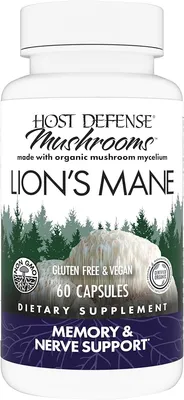
3. Host Defense Lion’s Mane — Best Add-On for Long-Term Support
Lion’s mane mushroom (Hericium erinaceus) has a unique mechanism: it stimulates nerve growth factor (NGF) production. NGF supports neuronal survival, synaptic formation, and cognitive resilience — precisely the processes affected by estrogen decline.
How it works: Hericenones and erinacines (compounds specific to lion’s mane) cross the blood-brain barrier and trigger NGF synthesis in neurons. Animal studies consistently show neurite outgrowth, synaptic density improvements, and cognitive enhancement. Human data is smaller-scale but directionally supportive.
The evidence: A 2009 Japanese trial found that lion’s mane at 3,000mg daily for 16 weeks improved cognitive function scores in older adults with mild cognitive impairment. Effects faded after stopping — suggesting the supplement needs to be ongoing. A 2019 study found cognitive improvements in adults with mild Alzheimer’s disease. Menopause-specific trials are lacking, but the mechanism aligns with the synaptic loss menopause causes.
Dosing: 1,000-3,000mg daily of extract. Host Defense uses a full-spectrum blend (mycelium plus fruiting body). Allow 8-16 weeks for noticeable effects — this is a slow-acting supplement.
Safety: Well-tolerated with no meaningful drug interactions documented. Rare allergy potential (it’s a mushroom). Generally considered one of the safest nootropic supplements. Learn more in Gut-Brain Connection After 50.
Who it’s best for: Women wanting long-term cognitive support alongside a targeted acute-symptom approach. Not a first-line single pick, but a reasonable layer on top of magnesium L-threonate and omega-3 for women with significant cognitive complaints.
4. Gaia Herbs Rhodiola Rosea — Best for Mental Fatigue
Rhodiola is the adaptogen for exhaustion-type brain fog — the kind where you’re not anxious, you’re depleted. It’s also the fastest-acting supplement on this list, often producing noticeable mental clarity within 1-2 weeks.
How it works: Rhodiola modulates the HPA axis and supports mitochondrial ATP production. The mild monoamine oxidase inhibition affects mood and mental energy without the stimulant feel of caffeine. For menopausal women whose brain fog tracks with low energy and cortisol flattening, this mechanism fits.
The evidence: A 2007 randomized trial in adults with stress-related fatigue found 576mg of rhodiola daily produced significant improvements in fatigue, attention, and quality of life within 28 days. A 2012 study in Phytomedicine showed measurable fatigue reduction after one week. Panossian’s review work on rhodiola documents multiple HPA-axis and cognitive benefits.
Dosing: 200-400mg of standardized extract (3% rosavins, 1% salidroside) once or twice daily, taken before noon. Rhodiola is mildly stimulating; evening doses interfere with sleep.
Safety: MAOI-like activity means caution with SSRIs, SNRIs, and MAO inhibitors. Discuss with your prescribing doctor before combining with antidepressants. May mildly lower blood pressure. For deeper context on choosing among adaptogens, see Best Adaptogens for Stress Over 50.
Who it’s best for: Women whose brain fog feels like mental exhaustion rather than anxiety — “empty head,” struggles to initiate tasks, slower morning cognition. Also a reasonable first pick for women wanting faster feedback before committing to slower-acting supplements. See also Best Supplements for Brain Fog for the wider cognitive toolkit.
5. Jarrow Formulas PS 100 — Best Adjunct for Stress-Driven Brain Fog
Phosphatidylserine (PS) is a phospholipid that makes up part of brain cell membranes. Supplementation has a modest but real effect on cortisol regulation and cognitive complaints linked to chronic stress — a common overlap with menopause.
How it works: PS supports neuronal membrane composition and may modulate the cortisol response to stress. In menopausal women, cortisol dysregulation is common (flattening of the daily rhythm), and that dysregulation contributes to cognitive complaints.
The evidence: A 2010 trial in Nutrition found PS reduced cortisol response to exercise stress. A 2013 study in Aging showed PS improved memory in older adults. A 2014 meta-analysis supported PS for age-related cognitive decline, with modest effect sizes.
Dosing: 100mg three times daily (300mg total) during the initial 8-12 weeks; maintenance at 100-200mg daily. Take with meals.
Safety: Generally well-tolerated. Soy-derived PS (used in most commercial products including Jarrow’s) is safe for most women but worth noting if you’re avoiding soy. Sunflower-derived PS exists for soy-free preference but is harder to find and more expensive.
Who it’s best for: Women whose brain fog is tightly linked to stress and cortisol patterns — afternoon slumps, stress-triggered memory lapses, racing-mind plus forgetfulness. Not a first-line pick, but a reasonable third or fourth layer when other approaches provide partial relief.
Who Should NOT Take These Supplements
Most women over 50 can safely use the supplements on this list, but several groups need medical guidance:
Women on SSRIs, SNRIs, or MAO inhibitors. Rhodiola’s MAOI-like activity raises interaction risk. Clear with your prescribing doctor before starting.
Women with kidney disease. Magnesium L-threonate adds to your magnesium load. Your nephrologist should weigh in on any magnesium supplementation.
Women on blood thinners. Omega-3 at high doses can add to bleeding-time effects of warfarin, clopidogrel, or aspirin. Usually manageable with monitoring, but worth discussing.
Women with active autoimmune disease. Lion’s mane has mild immune-modulating effects that can be unpredictable during autoimmune flares. Not a hard contraindication, but cautious use with specialist input.
Women during active cancer treatment. Any supplement added during chemotherapy or radiation should be cleared with your oncology team. The caution applies to all entries on this list.
Women with severe cognitive symptoms. If your memory problems are significantly affecting work, driving, or managing household tasks, see a doctor rather than starting supplements. A thorough evaluation rules out thyroid issues, vitamin B12 deficiency, sleep apnea, and other treatable causes before supplement experimentation.
Building Your Brain Fog Strategy
Rather than stacking all five at once, match supplements to your dominant symptom pattern:
If your brain fog is primarily word-finding, working memory, and processing speed: Start with Life Extension Neuro-Mag. The synaptic-density mechanism fits best.
If your brain fog comes with fatigue and low morning energy: Start with Gaia Herbs Rhodiola. The fast onset lets you judge the effect within a few weeks.
If you have low omega-3 intake (no fatty fish in your diet): Add Nordic Naturals Ultimate Omega regardless of your primary symptom. This is more universally relevant than the others.
If your brain fog travels with stress and cortisol patterns: Consider Jarrow PS 100 as an add-on after establishing a primary supplement.
If you want long-term cognitive support: Layer in Host Defense Lion’s Mane as a maintenance supplement. Not urgent, but reasonable for ongoing brain health.
Beyond supplements, these evidence-based strategies amplify results:
- Address sleep first. Fragmented sleep from night sweats drives 50-70% of perceived cognitive symptoms in many women. Fix the sleep disruption before evaluating supplement effects.
- Consider HRT. It’s the strongest-evidence intervention for menopause-related cognitive symptoms when started within the first 10 years of menopause. See Hormone Replacement Therapy Guide for the discussion framework with your doctor.
- Exercise regularly. Aerobic exercise has robust cognitive benefits during the menopause transition — 150 minutes weekly of moderate activity is the minimum target.
- Mediterranean-style eating. The strongest dietary pattern for cognitive preservation, layered with supplements as needed.
For women also dealing with hair thinning, see Best Supplements for Menopause Hair Loss & Thinning. For the broader menopause toolkit, see Perimenopause Symptoms and Supplements.
The Bottom Line
Menopause brain fog is real, mechanism-driven, and mostly temporary — but the 2-5 years you spend in the thick of it are still years you’d rather not feel cognitively foggy. Targeted supplements can help meaningfully when matched to your specific symptom pattern.
Life Extension Neuro-Mag is the best single pick: strongest mechanism match, clinical evidence, and safety profile. Layer omega-3 DHA if your dietary fish intake is low. Add Rhodiola for faster feedback and mental-fatigue-type symptoms. Treat lion’s mane and phosphatidylserine as tier-two options to layer in after you’ve established what works at the first level.
Give any supplement 8-12 weeks at a clinical dose before judging. Track a simple 1-10 focus score weekly so you can evaluate changes against data rather than memory. And if your symptoms are severe or progressive, prioritize a doctor visit over supplement experimentation — cognitive decline has treatable causes that are worth ruling out before assuming it’s “just menopause.”
Sources
- Weber et al., 2012 — Cognition during the menopause transition
- Greendale et al., 2013 — Menopause transition and cognitive performance
- Mosconi et al., 2017 — Perimenopause and brain energy metabolism
- Liu et al., 2016 — Magnesium L-threonate and cognitive impairment
- Zhang et al., 2022 — Magtein and cognitive performance in adults
- Yurko-Mauro et al., 2010 — DHA and age-related cognitive decline
- Pottala et al., 2014 — Omega-3 index and brain volumes
- Mori et al., 2009 — Lion’s mane and mild cognitive impairment
- Darbinyan et al., 2007 — Rhodiola for stress-related fatigue
- Panossian et al., 2010 — Rhodiola rosea review
- Kato-Kataoka et al., 2010 — Phosphatidylserine and memory in older adults
- Glade & Smith, 2015 — Phosphatidylserine review
All Products We Reviewed
- Magtein (magnesium L-threonate) — the only form that reliably crosses the blood-brain barrier
- Clinical dose: 2,000mg L-threonate daily (144mg elemental magnesium)
- Backed by MIT-developed formula with peer-reviewed cognitive data
- Non-GMO, vegetarian capsules, third-party tested
- Expensive — about $1.25/day at clinical dose
- Three capsules daily — larger pill burden than single-softgel options

- 1,280mg EPA+DHA per 2-softgel serving — clinical dose
- Triglyceride form for superior absorption
- IFOS 5-star certified for purity and freshness
- Lemon flavor eliminates fish burps for most users
- Premium price point vs. mass-market fish oils
- Large softgels can be challenging to swallow
- Organic, full-spectrum Hericium erinaceus (mycelium and fruiting body)
- Founded by renowned mycologist Paul Stamets
- Emerging evidence for nerve growth factor stimulation
- Well-tolerated with no meaningful drug interactions
- Evidence for menopause brain fog specifically is limited
- Requires 8-16 weeks at 1,000-3,000mg daily for effect

- Standardized to 3% rosavins and 1% salidroside (clinical ratio)
- Fastest-acting cognitive supplement on this list — effects in 1-2 weeks
- Purity-Tested program with full farm-to-bottle traceability
- Particularly strong for mental fatigue and low morning energy
- Mild MAOI-like activity — caution with SSRIs and antidepressants
- Mildly stimulating — must be taken before noon
- 100mg phosphatidylserine per softgel — clinical range
- Soy-derived PS (Sharp-PS) with published cognitive trial data
- Modest cortisol-lowering effect supports menopause stress overlap
- Third-party tested, GMP manufactured
- Soy-derived — worth noting for women avoiding soy
- Modest effect size compared to the other picks
Frequently Asked Questions
Is menopause brain fog real or imagined?
It's real and measurable. A 2012 study in Menopause confirmed that women in the menopausal transition show objective declines in verbal memory and processing speed — not just subjective feelings. Estrogen affects brain glucose uptake, synaptic plasticity, and neurotransmitter balance. When estrogen drops, these systems operate less efficiently. The good news: research suggests most of the cognitive changes stabilize in postmenopause rather than progressing, and targeted supplements and lifestyle support can help meaningfully.
How long until supplements help menopause brain fog?
Timelines vary by supplement. Rhodiola rosea often produces noticeable mental clarity within 1-2 weeks. Magnesium L-threonate and phosphatidylserine typically show effects in 4-8 weeks. Omega-3 DHA changes brain membrane composition slowly — 8-12 weeks for full benefit. Lion's mane mushroom usually needs 8-16 weeks. Take any supplement at a clinical dose for at least 12 weeks before deciding if it's helping. Track a simple 1-10 focus score weekly so you can judge changes against data rather than memory.
Do I need HRT or can supplements handle menopause brain fog?
It depends on severity and risk factors. Hormone replacement therapy has the strongest evidence for protecting cognitive function during the menopause transition when started within 10 years of menopause onset. Supplements are reasonable for mild to moderate brain fog, for women who cannot or prefer not to use HRT, or as a complement to HRT. If brain fog is significantly affecting work performance or daily function, discuss HRT with your doctor rather than relying on supplements alone.
Can I take magnesium L-threonate with other magnesium forms?
Technically yes, but there's usually no need. Magnesium L-threonate is the only form that crosses the blood-brain barrier efficiently — that's what it's for. If you're already taking magnesium glycinate or citrate for sleep or constipation, you can continue those in the evening and take Neuro-Mag earlier in the day. Total elemental magnesium should generally stay under 400-500mg daily from supplements. High doses can cause loose stools. Women with kidney disease should not self-supplement magnesium without medical guidance.
Does lion's mane mushroom actually work for brain fog?
Emerging but not definitive evidence. A 2009 Japanese trial found lion's mane at 3,000mg daily improved cognitive function scores in older adults with mild cognitive impairment after 16 weeks — but the effect faded after stopping. Mechanistically, lion's mane appears to stimulate nerve growth factor (NGF) production, which supports neuronal health. For menopause brain fog specifically, evidence is limited to mechanism and small trials rather than large menopause-specific studies. Worth considering as part of a broader stack; not a first-line single pick.
What about brain fog from poor sleep during menopause?
This is a major overlap. Night sweats and hormonal sleep disruption compound cognitive problems — fragmented sleep alone can produce brain fog in anyone. If your brain fog closely tracks with sleep quality, prioritize sleep-focused interventions first: magnesium glycinate in the evening, a cooler bedroom, and targeted hot flash management. See our companion guide on menopause supplements for hot flashes. Fixing sleep often resolves 50-70% of perceived cognitive symptoms.
Are there foods that help menopause brain fog?
Yes, and they complement supplements well. Fatty fish (salmon, sardines, mackerel) twice weekly provides dietary DHA alongside a supplement. Berries, leafy greens, and nuts support vascular health — which affects brain oxygenation. Adequate protein at each meal (25-30g) stabilizes blood sugar, reducing afternoon cognitive crashes. A Mediterranean-style eating pattern has the strongest evidence for cognitive preservation. Supplements work best as a layer on top of a solid diet, not as a replacement.