
Collagen Peptides vs UC-II: Which Collagen Is Best for Joint Pain?
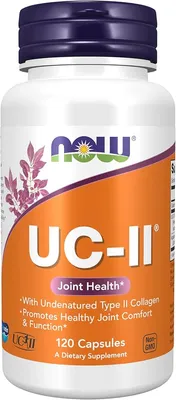
NOW Foods UC-II Collagen
Best UC-II for targeted joint pain relief — clinically studied dose at the lowest price.
- Contains the clinically studied 40mg UC-II dose
- One small capsule per day — no mixing or measuring
- GMP-certified manufacturing facility
For pure joint pain relief in adults over 50, UC-II (undenatured type II collagen) has stronger clinical evidence than collagen peptides — and it works through a completely different mechanism. UC-II trains your immune system to stop attacking your own joint cartilage, while collagen peptides provide amino acid building blocks that your body may use for tissue repair. A key clinical trial found UC-II outperformed the popular glucosamine-chondroitin combination for knee osteoarthritis at just 40mg per day. But if you want broader benefits for skin, hair, nails, and tendons alongside joint support, collagen peptides offer more versatile coverage at a 10-15g daily dose.
We reviewed the clinical evidence for both types, compared their mechanisms of action, and evaluated three widely available products to help you choose the right collagen for your joints.
What Are Collagen Peptides?
Collagen peptides — also called hydrolyzed collagen — are collagen proteins that have been broken down into small, easily absorbed fragments. Most collagen peptide supplements come from bovine (cow) hide or bones, though marine (fish) sources are also available.
When manufacturers hydrolyze collagen, they use enzymes to break the large, tough collagen protein into short chains of amino acids called peptides. These peptides dissolve in liquid, absorb quickly through your gut, and deliver three amino acids that your body uses to build and repair connective tissue: glycine, proline, and hydroxyproline.
The Types That Matter
Collagen peptide supplements typically contain type I and type III collagen — the types found in skin, tendons, ligaments, and bones. Type I is the most abundant collagen in your body, making up about 90% of your total collagen. Type III supports the structure of blood vessels, organs, and skin elasticity.
Neither type I nor type III is the primary collagen in joint cartilage. That role belongs to type II collagen, which we will cover next. This distinction matters for joint pain.
How Collagen Peptides Are Thought to Work
When you consume hydrolyzed collagen, the peptides are absorbed into your bloodstream and may stimulate your body’s own collagen production. Research suggests several mechanisms:
- Amino acid supply. Glycine, proline, and hydroxyproline are the three amino acids most critical for collagen synthesis. Supplementing with collagen peptides provides these building blocks in a readily available form.
- Cellular signaling. Some research suggests collagen peptides act as signals to your fibroblasts and chondrocytes (the cells that build connective tissue and cartilage), telling them to ramp up production of new collagen and proteoglycans.
- Broad tissue support. Because types I and III collagen are found throughout your body, peptide supplements may benefit skin elasticity, hair strength, nail growth, tendon integrity, and bone density — not just joints.
The standard dose is 10-15 grams per day, usually taken as a powder mixed into coffee, smoothies, or water. This is a relatively large dose compared to other supplements because collagen peptides work as a nutritional input, not a targeted drug.
What Is UC-II (Undenatured Type II Collagen)?
UC-II is a very different product despite sharing the word “collagen.” It is undenatured type II collagen — meaning the collagen’s natural triple-helix structure is preserved intact, not broken down into peptides. UC-II is sourced from chicken sternum cartilage.
The key word is undenatured. Regular cooking, processing, or hydrolysis destroys (denatures) collagen’s three-dimensional structure. UC-II manufacturing uses low-temperature processing to keep the collagen molecule intact. This intact structure is essential to how it works.
How UC-II Works: The Oral Tolerance Mechanism
UC-II does not work like a food or building block. It works through your immune system via a process called oral tolerance.
Here is the concept in plain terms: in osteoarthritis and age-related joint wear, your immune system sometimes identifies fragments of your own damaged cartilage as foreign invaders. It then sends immune cells to attack the cartilage, accelerating the very breakdown that produced the fragments in the first place. This creates a destructive cycle.
When you take a small amount of intact type II collagen orally, it interacts with immune tissue in your gut (called Peyer’s patches). Your immune system “sees” this intact cartilage protein and learns to recognize it as harmless. Over time, this calms the immune response against your own cartilage — reducing the inflammation and destruction happening in your joints.
This is why the UC-II dose is just 40mg per day — a tiny fraction of the 10-15g collagen peptide dose. You are not feeding your body building material. You are retraining your immune system. More is not better; the immune modulation requires a specific, small exposure.
Head-to-Head: The Evidence Compared
The Lugo 2016 Trial — UC-II vs Glucosamine + Chondroitin
The most important study for this comparison is the Lugo et al. 2016 trial published in the International Journal of Medical Sciences. This randomized, double-blind trial enrolled 191 volunteers with knee osteoarthritis and compared three groups over 180 days:
- UC-II (40mg/day)
- Glucosamine HCl (1,500mg) plus chondroitin sulfate (1,200mg) daily
- Placebo
Results: UC-II significantly reduced knee pain scores (WOMAC) compared to both placebo and the glucosamine-chondroitin combination at day 180. UC-II also showed greater improvement in joint stiffness and physical function. The glucosamine-chondroitin group showed some improvement over placebo but did not reach the same level of benefit as UC-II.
This trial is notable because glucosamine plus chondroitin is one of the most widely used joint supplement combinations — and UC-II outperformed it at a fraction of the dose.
The Clark 2008 Trial — UC-II for Knee OA
An earlier trial by Crowley et al. (2009) published in the International Journal of Medical Sciences studied UC-II in 52 osteoarthritis patients over 90 days. Participants taking 40mg of UC-II daily showed significant improvement in pain, stiffness, and physical function compared to a glucosamine-chondroitin group.
While smaller than the Lugo trial, this study provided early evidence that UC-II’s immune-modulating mechanism could be clinically meaningful for osteoarthritis.
Collagen Peptides: The Garcia-Coronado 2019 Review
A 2019 systematic review by Garcia-Coronado et al. published in the International Orthopaedics journal examined the evidence for hydrolyzed collagen in joint health. The review found that collagen peptides at 10g/day showed some benefit for joint pain in physically active individuals and modest improvements in knee osteoarthritis symptoms.
However, the authors noted that the evidence is less consistent than for UC-II, the studies tended to be smaller, and many were industry-funded. The benefits of collagen peptides for joints appear real but more modest than UC-II’s effects in head-to-head comparisons.
The Zdzieblik 2017 Activity-Related Joint Pain Study
A 2017 trial by Zdzieblik et al. published in Applied Physiology, Nutrition, and Metabolism studied 5g of collagen peptides daily in 147 athletes with activity-related joint pain. After 12 weeks, the collagen group showed significantly reduced joint pain during activity compared to placebo.
This study is relevant for adults over 50 who experience joint pain during exercise or daily activities (walking, stairs, gardening) rather than clinical osteoarthritis. Collagen peptides may support these more active-use scenarios even if their evidence for osteoarthritis is weaker than UC-II’s.
What the Evidence Tells Us
| Factor | Collagen Peptides | UC-II |
|---|---|---|
| Mechanism | Nutritional building blocks (amino acids) | Immune modulation (oral tolerance) |
| Collagen types | Types I and III | Type II |
| Daily dose | 10-15 grams (powder) | 40mg (one capsule) |
| Source | Bovine hide/bone or marine fish | Chicken sternum cartilage |
| Strongest evidence for | Skin, hair, nails, activity-related joint discomfort | Knee osteoarthritis, joint pain and stiffness |
| Time to effect | 8-12 weeks | 8-12 weeks (best results at 180 days) |
| Head-to-head with glucosamine | Not directly tested | Outperformed glucosamine + chondroitin (Lugo 2016) |
| Additional benefits | Skin elasticity, hair strength, nail growth, bone density | Joint-specific only |
When to Choose Collagen Peptides
Collagen peptides are the better choice if:
You want multi-system benefits beyond just joints. Collagen peptides support skin elasticity, hair thickness, nail strength, tendon integrity, and bone density. If you are noticing thinning skin, brittle nails, or general connective tissue aging alongside joint stiffness, peptides address all of these in one supplement.
Your joint discomfort is activity-related rather than osteoarthritis. The Zdzieblik trial showed collagen peptides helped athletes with exercise-induced joint pain. If your knees ache after gardening, walking, or climbing stairs — but you have not been diagnosed with osteoarthritis — peptides may provide the connective tissue support you need.
You prefer a food-based approach. Collagen peptides dissolve into coffee, smoothies, or soup. They are essentially a protein supplement with a targeted amino acid profile. If you prefer adding a powder to your morning routine over swallowing capsules, peptides fit more naturally into daily habits.
You are already getting some collagen peptide benefit and want to optimize. If you drink bone broth regularly, you are already consuming some collagen. A peptide supplement provides a standardized, measured dose to build on that foundation.
Dose: 10-15g daily, ideally on an empty stomach or with vitamin C (which supports collagen synthesis). Many people add it to their morning coffee or a breakfast smoothie.
When to Choose UC-II
UC-II is the better choice if:
Joint pain is your primary concern. If you are dealing with knee pain, hip stiffness, or diagnosed osteoarthritis and want the most targeted supplement with the strongest clinical evidence, UC-II is the clear winner. The Lugo 2016 trial showed it outperformed the most popular joint supplement combination (glucosamine plus chondroitin) for knee osteoarthritis symptoms.
You want maximum convenience. One small capsule per day — no mixing, no measuring, no flavor to deal with. For people who already take several supplements and do not want to add a powder to their routine, UC-II’s simplicity is a real advantage.
You take glucosamine or chondroitin and want additional support. UC-II works through a completely different mechanism than glucosamine, chondroitin, or collagen peptides. Adding UC-II to an existing joint supplement regimen addresses the immune-mediated cartilage destruction that other supplements do not target. Talk to your doctor about combining supplements.
You are on a budget. UC-II supplements cost roughly $0.30-0.60 per day, while quality collagen peptide powders run $1.00-1.50 per day. The lower dose means smaller packaging and lower cost per serving.
Dose: 40mg UC-II daily, taken in a single capsule. Some practitioners recommend taking it on an empty stomach, though the clinical trials did not specify timing requirements.
Safety and Considerations
Both collagen peptides and UC-II have strong safety profiles in clinical studies. Neither has shown significant side effects at recommended doses. Still, keep the following in mind:
Allergies and dietary restrictions. Collagen peptides are typically bovine- or marine-derived. UC-II comes from chicken. If you have allergies to any of these animal sources, choose accordingly. Neither is suitable for vegans or vegetarians.
Drug interactions. Collagen supplements are not known to have significant drug interactions. However, because UC-II modulates immune function, people taking immunosuppressive medications should consult their doctor before starting UC-II. This is a precautionary recommendation — clinical trials have not reported problems, but the theoretical concern exists.
Realistic expectations. Neither supplement is a painkiller. They support your body’s own repair and regulatory processes over weeks and months. Plan on 90 days of daily use before evaluating results. If your joint pain is severe or rapidly worsening, see your doctor — supplements are not a substitute for medical evaluation and treatment.
Consult your doctor before starting any new supplement, especially if you have autoimmune conditions, take prescription medications, or have been diagnosed with a specific joint disorder. Your doctor can help determine whether collagen supplementation makes sense alongside your current treatment plan.
Our Product Recommendations
NOW Foods UC-II Collagen — Best for Targeted Joint Pain
NOW Foods delivers the clinically studied 40mg UC-II dose in a single small capsule. At roughly $0.30 per day, it is the most affordable way to get UC-II’s immune-modulating joint support. NOW’s GMP-certified manufacturing provides baseline quality assurance.
The main limitation is scope — UC-II only targets joints. You will not see skin, hair, or nail benefits. But if joint pain is your primary concern, that focused action is an advantage, not a drawback.
Who it’s best for: Adults over 50 dealing with knee pain, hip stiffness, or osteoarthritis who want the most clinically supported joint collagen at the lowest price. Read our full review: NOW Foods UC-II Collagen
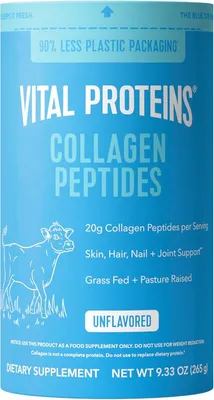
Vital Proteins Collagen Peptides — Best Collagen Peptides Overall
Vital Proteins earns the NSF Certified for Sport designation — the gold standard for third-party purity testing. The grass-fed, pasture-raised bovine source and unflavored powder format make it easy to incorporate into any daily routine.
Per serving, Vital Proteins costs about 20% more than Sports Research. The NSF certification justifies that premium if manufacturing quality and label accuracy are priorities for you.
Who it’s best for: Adults who want broad connective tissue support — joints, skin, hair, nails — and are willing to pay a small premium for the highest level of third-party testing. Read our full review: Vital Proteins Collagen Peptides
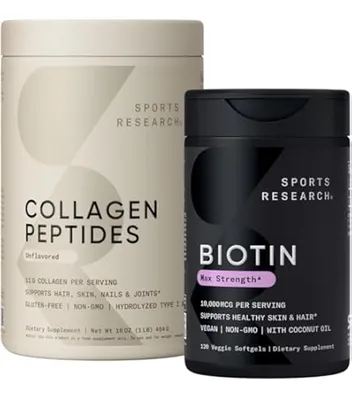
Sports Research Collagen Peptides — Best Value Peptides
Sports Research delivers a clean, well-absorbed hydrolyzed collagen at a lower price per serving than Vital Proteins. The grass-fed, pasture-raised bovine source and Igen Non-GMO testing give it solid quality credentials. The unflavored powder dissolves cleanly in hot or cold liquids.
The trade-off is testing level — Igen Non-GMO is less comprehensive than NSF Certified for Sport, though it still provides meaningful quality verification.
Who it’s best for: Budget-conscious adults who want collagen peptide benefits without paying the premium for NSF certification. Read our full review: Sports Research Collagen Peptides
Frequently Asked Questions
Can I take collagen peptides and UC-II together? Yes, you can take both safely. They work through completely different mechanisms — collagen peptides provide amino acid building blocks for tissue repair, while UC-II modulates your immune response to protect cartilage. Taking both is unlikely to cause interactions. Some people use collagen peptides in their morning coffee for general connective tissue support and take a UC-II capsule separately for targeted joint relief. That said, if joint pain is your main concern, starting with UC-II alone and evaluating after 90 days is a more cost-effective approach.
How long does UC-II take to work for joint pain? Most clinical trials measured outcomes at 90 and 180 days. Some people report reduced stiffness within 4-6 weeks, but meaningful pain improvement typically takes 2-3 months of daily use. The Lugo 2016 trial showed significant improvement in knee pain and function at 180 days compared to placebo. Give UC-II at least 90 days of consistent use before judging whether it works for you.
Is UC-II better than glucosamine for joint pain? UC-II has performed well in head-to-head comparisons. The Lugo 2016 trial found that 40mg of UC-II reduced knee pain scores more than 1,500mg glucosamine plus 1,200mg chondroitin taken daily over 180 days. However, glucosamine has a much larger body of research spanning decades. Some people respond better to one than the other. If glucosamine alone has not provided enough relief, switching to or adding UC-II is a reasonable next step — discuss this with your doctor.
What is the right dose for collagen peptides for joints? The studied dose for hydrolyzed collagen peptides is 10-15 grams per day, typically taken as a powder mixed into a beverage. Some studies have used lower doses (5-10g) and still shown benefits for skin and connective tissue, but 10g is the floor most researchers recommend for meaningful joint and cartilage support. Unlike UC-II, which requires only 40mg, collagen peptides need this larger dose because they work as a nutritional building block rather than an immune modulator.
Which type of collagen should I take for osteoarthritis? For osteoarthritis specifically, UC-II (undenatured type II collagen) has the most targeted evidence. It works by calming the immune-driven inflammation that breaks down cartilage in osteoarthritic joints. The Crowley 2009 and Lugo 2016 trials both focused on osteoarthritis patients and showed meaningful improvements in pain, stiffness, and physical function. Collagen peptides may also help by supplying building blocks for cartilage repair, but the evidence for peptides specifically in osteoarthritis is less robust than for UC-II.
The Bottom Line
Collagen peptides and UC-II are not competing products — they are different tools for different goals. If joint pain from osteoarthritis or age-related wear is your primary concern, UC-II has the stronger clinical evidence at a smaller dose and lower cost. If you want broader connective tissue support for your skin, hair, nails, and joints together, collagen peptides are the more versatile choice.
For most adults over 50 with meaningful joint pain, we recommend starting with UC-II (40mg daily) and giving it 90 days. If you also want skin and hair benefits, adding a collagen peptide powder to your morning routine is a reasonable complement. And as always, consult your doctor before starting any new supplement — especially if you have an autoimmune condition or take immunosuppressive medications.
For related reading, see our guides on Best Collagen for Joint Pain, Collagen or Glucosamine for Knees?, Best Collagen for Women Over 50, and Glucosamine vs Chondroitin.
All Products We Reviewed
- Contains the clinically studied 40mg UC-II dose
- One small capsule per day — no mixing or measuring
- GMP-certified manufacturing facility
- Most affordable UC-II option at roughly $0.30/day
- Chicken-derived — not suitable for vegetarians or poultry-free diets
- Only targets joints — no skin, hair, or nail benefits
- NSF Certified for Sport — rigorous third-party testing
- Grass-fed, pasture-raised bovine source
- Versatile unflavored powder dissolves in hot or cold liquids
- Broad benefits for joints, skin, hair, and nails
- Types I and III — less direct evidence for joint pain than UC-II
- Requires 10-15g daily (larger serving than a single capsule)
- Higher price per serving than Sports Research
- Igen Non-GMO tested for purity
- Grass-fed, pasture-raised bovine collagen
- Unflavored powder with clean dissolve
- Lower cost per serving than Vital Proteins
- Types I and III — same limitation as all hydrolyzed collagen for joint pain
- No NSF or USP certification (though Igen-tested)
Frequently Asked Questions
Can I take collagen peptides and UC-II together?
Yes, you can take both safely. They work through completely different mechanisms — collagen peptides provide amino acid building blocks for tissue repair, while UC-II modulates your immune response to protect cartilage. Taking both is unlikely to cause interactions. Some people use collagen peptides in their morning coffee for general connective tissue support and take a UC-II capsule separately for targeted joint relief. That said, if joint pain is your main concern, starting with UC-II alone and evaluating after 90 days is a more cost-effective approach.
How long does UC-II take to work for joint pain?
Most clinical trials measured outcomes at 90 and 180 days. Some people report reduced stiffness within 4-6 weeks, but meaningful pain improvement typically takes 2-3 months of daily use. The Lugo 2016 trial showed significant improvement in knee pain and function at 180 days compared to placebo. Give UC-II at least 90 days of consistent use before judging whether it works for you.
Is UC-II better than glucosamine for joint pain?
UC-II has performed well in head-to-head comparisons. The Lugo 2016 trial found that 40mg of UC-II reduced knee pain scores more than 1,500mg glucosamine plus 1,200mg chondroitin taken daily over 180 days. However, glucosamine has a much larger body of research spanning decades. Some people respond better to one than the other. If glucosamine alone has not provided enough relief, switching to or adding UC-II is a reasonable next step — discuss this with your doctor.
What is the right dose for collagen peptides for joints?
The studied dose for hydrolyzed collagen peptides is 10-15 grams per day, typically taken as a powder mixed into a beverage. Some studies have used lower doses (5-10g) and still shown benefits for skin and connective tissue, but 10g is the floor most researchers recommend for meaningful joint and cartilage support. Unlike UC-II, which requires only 40mg, collagen peptides need this larger dose because they work as a nutritional building block rather than an immune modulator.
Which type of collagen should I take for osteoarthritis?
For osteoarthritis specifically, UC-II (undenatured type II collagen) has the most targeted evidence. It works by calming the immune-driven inflammation that breaks down cartilage in osteoarthritic joints. The Clark 2008 and Lugo 2016 trials both focused on osteoarthritis patients and showed meaningful improvements in pain, stiffness, and physical function. Collagen peptides may also help by supplying building blocks for cartilage repair, but the evidence for peptides specifically in osteoarthritis is less robust than for UC-II.