
Best Collagen Supplements for Joint Pain Over 50
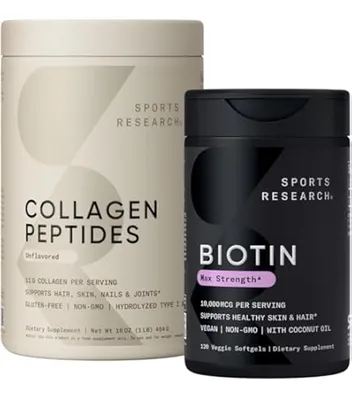
Sports Research Collagen Peptides
Best overall for general joint, tendon, and connective tissue support — versatile and well-absorbed.
- Hydrolyzed for high absorption
- Third-party tested (Igen Non-GMO)
- Unflavored — mixes into coffee, smoothies, or water
The best collagen supplement for joint pain in adults over 50 depends on your primary goal. For general joint and connective tissue support, Sports Research Collagen Peptides offers excellent absorption and versatility. For targeted joint pain and osteoarthritis relief, NOW Foods UC-II provides the type of collagen with the strongest clinical evidence — at just one small capsule per day.
We spent two months researching collagen science and comparing seven popular supplements, focusing on collagen type, clinical evidence, third-party testing, and real-world feedback from adults over 50.
Why Collagen Matters for Joint Health After 50
Collagen makes up about 70% of your cartilage — the rubbery tissue that cushions your joints. After 50, your body produces less collagen each year, and the collagen you do produce is lower quality. This gradual decline contributes to joint stiffness, reduced flexibility, and the cartilage thinning that drives osteoarthritis.
Supplemental collagen aims to counteract this decline, but not all collagen supplements work the same way.
The Two Types That Matter for Joints
This is where most collagen marketing gets confusing. There are dozens of collagen types in your body, but only two matter for joint pain:
Hydrolyzed collagen peptides (types I and III) are broken down into small peptides your body absorbs easily. They provide amino acid building blocks (glycine, proline, hydroxyproline) that your body may use to support cartilage, tendons, ligaments, and skin. The typical dose is 10-15 grams daily.
Undenatured type II collagen (UC-II) works completely differently. Instead of providing building blocks, UC-II trains your immune system to stop attacking your own cartilage — a process called oral tolerance. The dose is much smaller (40mg daily) because it’s an immune modulator, not a raw material.
For pure joint pain relief, UC-II has stronger clinical evidence. A 2016 study in the International Journal of Medical Sciences found UC-II outperformed glucosamine plus chondroitin for knee osteoarthritis symptoms.
Our Top 3 Picks Compared
1. Sports Research Collagen Peptides — Best Overall
Sports Research delivers a clean, well-absorbed hydrolyzed collagen at a competitive price. The unflavored powder dissolves completely in hot or cold liquids, making it easy to add to your morning coffee or a smoothie.
The grass-fed, pasture-raised bovine source and Igen Non-GMO testing give it solid quality credentials. At roughly $1.10 per serving, it’s one of the better values in the hydrolyzed category.
Who it’s best for: Adults over 50 who want broad connective tissue support — joints, tendons, skin, and hair — in a convenient daily powder.
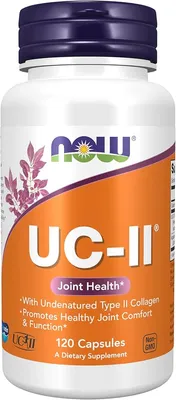
2. NOW Foods UC-II — Best for Joint Pain Specifically
If your primary concern is joint pain rather than general wellness, UC-II is the more targeted choice. NOW Foods delivers the clinically studied 40mg dose of undenatured type II collagen in a single small capsule.
The convenience factor is real — one capsule daily versus scooping and mixing 10-15 grams of powder. And at roughly $0.37 per day, it’s the most affordable option on our list.
Who it’s best for: Adults dealing with joint pain or stiffness who want the most clinically supported option at a low price.
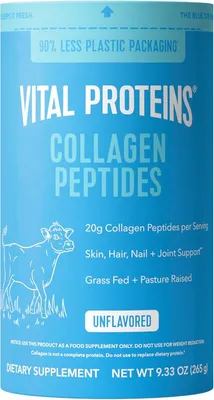
3. Vital Proteins Collagen Peptides — Best Third-Party Testing
Vital Proteins earns the NSF Certified for Sport designation, which means rigorous independent testing for purity and label accuracy. The product is solid — grass-fed bovine collagen in an unflavored powder format.
The main downside is price. Per serving, you’ll pay about 20% more than Sports Research for a very similar product. The NSF certification may justify that premium for some buyers.
Who it’s best for: Those who prioritize the highest level of third-party testing verification.
Collagen vs. Glucosamine: Do You Need Both?
This is one of the most common questions we hear. The short answer: they work differently, and combining them is reasonable.
Glucosamine sulfate provides raw materials for cartilage maintenance and has decades of clinical data behind it. UC-II collagen modulates the immune response that breaks down cartilage. They address different parts of the joint health equation.
If you’re already taking glucosamine and want additional support, adding UC-II collagen is a logical next step. Talk to your doctor about whether this combination makes sense for your situation.
What to Know Before You Buy
Match the type to your goal. For joint pain specifically, look for UC-II (undenatured type II). For broader connective tissue support, hydrolyzed peptides (types I and III) are the better fit.
Check the dose. Hydrolyzed collagen should provide 10-15g per serving. UC-II should provide 40mg. Many cheaper products underdose both.
Take it consistently. Collagen is not a pain reliever — it supports your body’s repair processes over weeks and months. Expect to wait 60-90 days before judging results.
Time it right. Hydrolyzed collagen absorbs best on an empty stomach or with vitamin C (which supports collagen synthesis). UC-II can be taken any time.
The Bottom Line
For most adults over 50 with joint discomfort, we recommend starting with NOW Foods UC-II if your primary concern is joint pain. It’s affordable, convenient, and has the most direct clinical evidence. If you want broader benefits for skin, hair, and connective tissue alongside joint support, Sports Research Collagen Peptides is the better all-around choice.
Whatever you choose, give it at least three months of consistent daily use before evaluating results. And as always, discuss any new supplement with your healthcare provider — especially if you take medications or have existing health conditions.
For skin and anti-aging benefits of collagen, see our guide on Best Collagen Supplements for Women Over 50.
All Products We Reviewed
- Hydrolyzed for high absorption
- Third-party tested (Igen Non-GMO)
- Unflavored — mixes into coffee, smoothies, or water
- Grass-fed, pasture-raised bovine source
- Types I and III — less direct joint pain evidence than UC-II
- Requires 10-15g daily dose (larger serving)
- UC-II — strongest evidence for joint pain specifically
- Only 40mg daily (one small capsule)
- GMP-certified facility
- Affordable price point
- Chicken-derived (not suitable for some dietary preferences)
- Only targets joints — less benefit for skin, hair, or tendons
- NSF Certified for Sport
- Widely available in stores
- Grass-fed, pasture-raised bovine
- Types I and III only
- Higher price per serving than Sports Research
- Some users report mild digestive discomfort
Frequently Asked Questions
Does collagen actually help with joint pain?
Yes, clinical evidence supports collagen for joint pain — but the type matters. Undenatured type II collagen (UC-II) at 40mg daily has shown significant pain reduction in osteoarthritis trials. Hydrolyzed collagen peptides (types I and III) at 10-15g daily may support cartilage, tendons, and ligaments, though the evidence is stronger for UC-II specifically targeting joint pain.
What type of collagen is best for joints?
Type II collagen is the primary structural protein in joint cartilage and has the most direct evidence for joint pain relief. Undenatured type II collagen (UC-II) works through a different mechanism than hydrolyzed collagen — it modulates the immune response that breaks down cartilage rather than simply providing building blocks.
How long does collagen take to work for joint pain?
Most studies show meaningful improvement in joint comfort after 60-90 days of daily use. Some people notice reduced stiffness within 4-6 weeks, but clinical trial endpoints are typically measured at 90 and 180 days. Consistency is more important than dose timing.
Is collagen better than glucosamine for joint pain?
They work differently and may complement each other. Glucosamine sulfate provides raw materials for cartilage maintenance, while UC-II collagen modulates the immune-driven cartilage breakdown process. Some people respond better to one than the other. If glucosamine alone isn't providing enough relief, adding UC-II collagen is a reasonable next step — consult your doctor.
Can you take collagen and glucosamine together?
Yes, collagen and glucosamine can generally be taken together safely. They work through different mechanisms, so combining them may provide complementary benefits. Take hydrolyzed collagen on an empty stomach for best absorption, and glucosamine with meals to reduce digestive discomfort.