
What Supplements Should an 80-Year-Old Man Take?

Centrum Silver Adults 50+
Sensible one-tablet nutritional insurance for a man over 80 with a small appetite, and the only senior multivitamin with a long randomized trial behind it. Choose it for reliability and price, not for premium ingredient forms.
- USP Verified for purity and potency
- Backed by the Physicians' Health Study II, the largest multivitamin randomized trial
- One tablet per day — easy to stick with
By 80, the supplement question changes. It stops being about optimizing and starts being about filling real gaps safely — the nutrients that absorption, appetite, and medications quietly erode. For most men in their 80s that means vitamin D3 at 800–2,000 IU a day, vitamin B12 (because 10–30% of older adults no longer pull enough of it out of food), omega-3 fats if fish is rare on the plate, enough protein at roughly 1.0–1.2 grams per kilogram of body weight daily, and a simple third-party-tested multivitamin as a backstop. Calcium is a food-first nutrient, topped up only toward the 1,200 mg daily target. Here’s what the research actually shows, and what to leave on the shelf.
What Changes in a Man’s Body After 80 — and Why Supplements Matter More Now
The nutritional picture at 80 is not the same as it was at 70. Appetite shrinks, the stomach makes less acid, kidneys filter more slowly, and most men are taking several prescription medications. None of that is a crisis. It just means the gaps are more predictable — and so are the fixes.
If you are reading this for a father or husband in his early 70s instead, the priorities shift slightly; our companion guide on what supplements a 70-year-old man should take covers that age band.
Absorption drops, especially for vitamin B12
Vitamin B12 in food is bound to protein, and it takes stomach acid to release it. Atrophic gastritis — thinning of the stomach lining — makes that harder, and the NIH Office of Dietary Supplements estimates that 10–30% of adults over 50 cannot absorb enough food-bound B12. Acid-reducing medications (omeprazole, pantoprazole, famotidine) and long-term metformin make it harder still. The synthetic B12 in supplements and fortified cereals does not need stomach acid, which is why the recommendation for older adults is to get B12 from those sources.
Kidneys filter less than they used to
Kidney filtration naturally slows with age, and reduced kidney function is common in older adults. That matters for supplements, because the kidneys clear excess minerals. Potassium, magnesium, and phosphorus supplements that are harmless at 50 can build up in a man with stage 3 kidney disease. A current eGFR number from recent bloodwork is the single most useful thing to have in hand before adding anything new.
Muscle loss accelerates
Sarcopenia — age-related loss of muscle mass and strength — picks up speed after 70. Lost muscle means weaker legs, slower walking, and more falls. No pill reverses it. Protein plus resistance movement does the work, and supplements only support that; gentle strength work matters as much as anything in the cupboard. Our guide to safe at-home exercise after 80 covers routines that pair well with a higher-protein diet.
Medication lists get long
Most men over 80 take four or more prescriptions. The American Geriatrics Society Beers Criteria — the standard list pharmacists use to flag medications that are risky in adults 65 and older — exists precisely because the margin for error narrows with age. Supplements are not drugs, but they interact with them, and they are rarely on the medication list the doctor sees.
The Science, Simplified: What Supplements Actually Do at This Age
Think of supplements the way you would think of a spare tire. They are genuinely valuable when something is flat. They do very little when all four tires are fine. Most of the disappointing supplement trials tested people who were not deficient in the first place.
What the largest trials found
The VITAL trial randomized 25,871 U.S. adults (men 50 and older, women 55 and older) to 2,000 IU of vitamin D3 and 1 gram of fish oil daily or placebo, and followed them a median of 5.3 years. Neither supplement reduced the primary endpoints of invasive cancer or major cardiovascular events in the overall group. A later VITAL analysis also found no reduction in fractures among generally healthy adults who were not deficient.
The Physicians’ Health Study II is the largest multivitamin trial ever run: 14,641 male physicians, average age 64 at entry, taking Centrum Silver or placebo for a median of 11.2 years. It found an 8% lower rate of total cancer in the multivitamin group and no effect on cardiovascular events. A modest, real, unspectacular result — which is a fair description of what a daily multivitamin does.
Where supplements clearly earn their place
The picture changes when a true deficiency exists. Correcting low B12 can improve fatigue, balance problems, and nerve symptoms, and untreated deficiency can cause nerve damage that does not fully reverse. Correcting low vitamin D supports calcium absorption and muscle function. These are repair jobs, not enhancements — which is why testing before supplementing is the recommendation for both nutrients.
Protein is the other clear win. A 2013 expert review in the Journal of the American Medical Directors Association (the PROT-AGE group) recommended 1.0–1.2 grams of protein per kilogram of body weight per day for healthy older adults — noticeably more than the standard adult RDA of 0.8 g/kg — to help maintain muscle. For a 170-pound man, that is roughly 77–93 grams a day, spread across meals.
What the evidence does not show
No supplement has been shown to extend lifespan in humans. No supplement prevents dementia; the trials of ginkgo, high-dose B vitamins, and vitamin E for that purpose have been disappointing. And no supplement restores testosterone to youthful levels. Anyone selling one of those promises is selling the promise, not the product.
A Practical Core Stack for Men Over 80
Four items cover the great majority of real gaps. Start one at a time, two weeks apart, so that any side effect has an obvious cause.
Vitamin D3: 800–2,000 IU daily, with a meal
The RDA for men over 70 is 800 IU (20 mcg) per day, and the tolerable upper limit for adults is 4,000 IU. Most clinicians land on 1,000–2,000 IU daily for men over 80, especially those who spend most of the day indoors. Ask for a 25-hydroxyvitamin D blood test rather than guessing.
Nature Made Vitamin D3 2000 IU is a reasonable default: USP Verified, about $12 for a 90-day bottle, which works out to roughly $0.13 a day. It is cholecalciferol (D3), the better-absorbed form, and it needs fat to be absorbed — take it with the largest meal of the day. It does not contain vitamin K2, and it can take 8–12 weeks to fully bring low levels up.
Vitamin B12: check the level, then supplement
The RDA is 2.4 mcg a day, but men over 80 on a proton pump inhibitor or long-term metformin often need far more because absorption is the bottleneck. Oral doses of 500–1,000 mcg daily are commonly used to overcome poor absorption; men with pernicious anemia may need injections. Ask for a serum B12 level — and if it comes back borderline (200–300 pg/mL), ask about a methylmalonic acid test, which catches deficiency the standard test misses.
B12 is also the most honest answer to “what helps energy after 80.” It does not create energy out of nothing. It restores it when the tank is actually low.
Omega-3 (EPA + DHA): if fish is rare on the plate
If fatty fish appears less than twice a week, a fish oil supplement is worth considering, mainly for triglycerides rather than any broader cardiovascular promise. Nordic Naturals Ultimate Omega provides 1,280 mg of omega-3s, including 1,100 mg of EPA and DHA, per two-softgel serving, in the triglyceride form and with IFOS 5-star testing for mercury, PCBs, and oxidation. At about $38 it is a premium price, and the softgels are large — a real consideration for men with swallowing difficulty.
Important caution: fish oil has a mild blood-thinning effect. If he takes warfarin, apixaban, clopidogrel, or daily aspirin, this one needs a doctor’s sign-off, not a self-decision.
A multivitamin: simple insurance when appetite is small
When a man is eating two modest meals a day, a once-daily multivitamin is sensible backstop nutrition. Centrum Silver Adults 50+ is the most studied option available — USP Verified, about $15, roughly $0.16 a day, one tablet, and stocked in every pharmacy. Its trade-offs are honest ones: synthetic forms of B12 and folate, some artificial colorants, and modest calcium and magnesium levels that will not correct a real deficiency.
One caution specific to men: choose a formula without added iron unless a doctor has diagnosed iron deficiency. Men do not lose iron monthly, and excess iron accumulates.
Protein and calcium: food first
Aim for 25–30 grams of protein at each of three meals — eggs, Greek yogurt, fish, chicken, beans, cottage cheese. This is more effective than any capsule for preserving strength. Men with advanced kidney disease (eGFR below 30) may need a lower, individualized protein target, so this is a conversation with the kidney doctor, not a general rule.
Calcium follows the same logic. The RDA for men 71 and older is 1,200 mg a day, and food sources are preferred; supplement only the shortfall, in doses of 500 mg or less at a time, because larger single doses are absorbed poorly. High-dose calcium supplements can also cause constipation and interfere with thyroid medication and some antibiotics.
What You Probably Don’t Need
The cupboard of an 80-year-old man is often fuller than it needs to be. These are the usual candidates for removal.
- High-dose vitamin E. A 2005 meta-analysis in Annals of Internal Medicine pooling 19 trials found that doses of 400 IU a day or more were associated with increased all-cause mortality. There is no good reason to take it at that dose.
- Iron, without a diagnosis. Unexplained low iron in an older man needs investigation, not a supplement.
- Beta-carotene supplements. Associated with increased lung cancer risk in smokers and former smokers in two large trials.
- “Testosterone boosters” and herbal energy blends. Typically proprietary blends with undisclosed amounts, no meaningful trial evidence, and real potential to interact with blood pressure medication.
- Megadose vitamin C. Above about 1,000 mg a day it mostly causes loose stools, and it raises oxalate, which matters for men with kidney stones or reduced kidney function.
- Five different products that all contain the same B vitamins. Duplication is the most common problem a pharmacist finds in a supplement review. If the cabinet already has several bottles, this guide to taking five or more supplements at once explains how to audit them.
What to Look For on the Label — and What to Avoid
Supplements are not approved by the FDA before sale, so independent verification is the reader’s substitute for regulation.
Third-party testing seals
Look for USP Verified, NSF Certified, or a ConsumerLab approval. These mean an outside laboratory confirmed the bottle contains what the label says, in the amount stated, without contamination above set limits. For fish oil, IFOS 5-star certification additionally checks oxidation and heavy metals. A seal is not a guarantee of benefit — it is a guarantee of honesty about contents.
Red flags on the label
“Proprietary blend” means the manufacturer lists the ingredients but not the amount of each one, so there is no way to tell whether the useful ingredient is present at a meaningful dose or a sprinkle. Also treat as warning signs: claims to “cure” or “reverse” any condition, before-and-after photos, doses far above the tolerable upper limit, and products sold only through a webinar or a phone call.
Practical form and swallowing
Large softgels, horse-pill multivitamins, and three-capsule servings all reduce the chance that a man in his 80s actually takes them. Liquids, chewables, and smaller tablets are legitimate choices. Gummies are easier but often contain lower doses and added sugar, and they rarely carry USP verification — read the amount per serving, not per bottle.
Check the full ingredient list for duplicates
Add up vitamin D, vitamin A, zinc, and B6 across every product being taken. Multivitamins, bone formulas, and eye formulas overlap constantly, and vitamin B6 above 100 mg a day over long periods has been linked to nerve symptoms.
When to Talk to Your Doctor or Pharmacist
At 80, this is not a formality. Polypharmacy — taking multiple medications at once — makes supplement interactions genuinely consequential, and most men never mention supplements at an appointment because they do not think of them as medicine.
Consult your doctor or pharmacist before starting anything on this page, and bring every bottle — prescriptions, over-the-counter products, vitamins, herbs — to one appointment. Pharmacists do this review for free at most chain pharmacies, and Medicare Part D covers an annual Medication Therapy Management review for people who qualify.
Make the call sooner rather than later if any of these apply:
- He takes a blood thinner (warfarin, apixaban, rivaroxaban, clopidogrel) — fish oil, vitamin E, ginkgo, and vitamin K all interact.
- He has reduced kidney function — magnesium, potassium, phosphorus, and high-dose vitamin C all need adjustment or avoidance.
- He takes thyroid medication — calcium and iron block its absorption and must be separated by at least four hours.
- He takes statins, blood pressure medication, or diabetes medication — several herbal products affect how these are metabolized.
- He has new fatigue, numbness or tingling in the hands or feet, unexplained weight loss, or increasing falls. These deserve a workup, not a supplement.
The bottom line: at 80, the best supplement plan is short, tested, and reviewed by someone who can see the whole medication list. Four well-chosen products usually beat twelve hopeful ones.
Sources:
- NIH Office of Dietary Supplements — Vitamin B12 Fact Sheet for Health Professionals — Supports the 2.4 mcg RDA, the 10–30% malabsorption estimate in adults over 50, and the recommendation to use fortified foods or supplements.
- NIH Office of Dietary Supplements — Vitamin D Fact Sheet for Health Professionals — Supports the 800 IU RDA for men over 70, the 4,000 IU upper limit, and the 25-hydroxyvitamin D test as the standard measure.
- NIH Office of Dietary Supplements — Calcium Fact Sheet for Health Professionals — Supports the 1,200 mg daily calcium RDA for men 71 and older and the advice to limit single doses to 500 mg or less.
- NIH Office of Dietary Supplements — Omega-3 Fatty Acids Fact Sheet for Health Professionals — Supports EPA/DHA intake guidance and the note on bleeding risk with anticoagulant medications.
- Manson JE et al. Vitamin D Supplements and Prevention of Cancer and Cardiovascular Disease. New England Journal of Medicine, 2019 (VITAL) — Source for the VITAL trial details: 25,871 participants, 2,000 IU vitamin D3 and 1 g fish oil daily, median 5.3 years, no reduction in primary endpoints.
- LeBoff MS et al. Supplemental Vitamin D and Incident Fractures in Midlife and Older Adults. New England Journal of Medicine, 2022 — Supports the statement that vitamin D did not reduce fractures in generally healthy, non-deficient adults.
- Gaziano JM et al. Multivitamins in the Prevention of Cancer in Men: the Physicians’ Health Study II. JAMA, 2012 — Supports the 14,641 male physicians, median 11.2 years, and 8% reduction in total cancer incidence figures.
- Bauer J et al. Evidence-Based Recommendations for Optimal Dietary Protein Intake in Older People (PROT-AGE). JAMDA, 2013 — Source for the 1.0–1.2 g/kg/day protein recommendation for healthy older adults.
- Miller ER et al. Meta-Analysis: High-Dosage Vitamin E Supplementation May Increase All-Cause Mortality. Annals of Internal Medicine, 2005 — Supports the caution against vitamin E doses of 400 IU per day or more.
- 2023 American Geriatrics Society Beers Criteria Update. Journal of the American Geriatrics Society — Supports the description of the Beers Criteria as the standard list of potentially inappropriate medications for adults 65 and older.
- Aroda VR et al. Long-term Metformin Use and Vitamin B12 Deficiency in the Diabetes Prevention Program Outcomes Study. J Clin Endocrinol Metab, 2016 — Supports the link between long-term metformin use and lower vitamin B12 levels.
- National Institute of Diabetes and Digestive and Kidney Diseases — Chronic Kidney Disease Tests & Diagnosis — Supports the use of eGFR as the measure of kidney function.
- The Alpha-Tocopherol, Beta Carotene Cancer Prevention Study Group. NEJM, 1994 — Supports the caution that beta-carotene supplements were associated with increased lung cancer risk in smokers.
- U.S. Pharmacopeia — USP Verified Mark — Explains what USP verification confirms about supplement identity, potency, and purity.
- Mayo Clinic — Fish Oil — Supports the mild blood-thinning effect of fish oil and the need for medical supervision with anticoagulants.
Products We Recommend
- USP Verified for purity and potency
- Backed by the Physicians' Health Study II, the largest multivitamin randomized trial
- One tablet per day — easy to stick with
- About $15, roughly $0.16 per day
- Available at essentially every pharmacy
- Uses synthetic forms such as cyanocobalamin, folic acid, and dl-alpha tocopherol
- Contains artificial colorants some people prefer to avoid
- Calcium and magnesium doses are modest and will not correct a real deficiency
- Lower potency on several key nutrients than premium formulas

- USP Verified for purity and potency
- 2,000 IU (50 mcg) of D3 per softgel — the baseline dose for most adults over 50
- Cholecalciferol (D3) form, better absorbed and longer-acting than D2
- About $0.13 per day; about $12 for a 90-day bottle
- Only helps fatigue when fatigue is actually caused by low vitamin D
- May take 8–12 weeks to fully replete low levels
- Must be taken with a meal containing fat
- No vitamin K2 included — must be bought separately if wanted
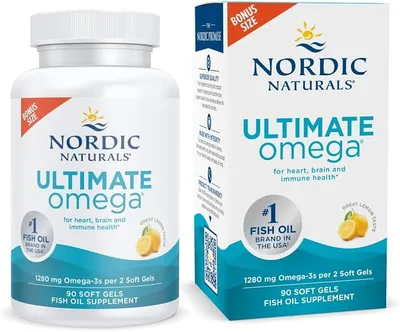
- 1,280 mg omega-3s including 1,100 mg EPA+DHA per 2-softgel serving
- Triglyceride form for better absorption
- IFOS 5-star rated for purity, including mercury, PCBs, and oxidation
- Lemon-flavored, so minimal fish burps
- Premium price at about $38
- Requires two softgels per serving
- Large softgel size may be hard to swallow
- Mild blood-thinning effect — needs medical sign-off with warfarin, apixaban, clopidogrel, or aspirin
Frequently Asked Questions
What vitamins should an 80 year old man take daily?
The daily core for most men over 80 is vitamin D3 (800–2,000 IU), vitamin B12 (often 500–1,000 mcg orally, since 10–30% of older adults absorb too little from food), and a USP Verified once-daily multivitamin without added iron. Omega-3 EPA+DHA is worth adding if fatty fish is eaten less than twice a week. Blood tests for vitamin D and B12 should guide the doses rather than guesswork, and every addition should be reviewed by a doctor or pharmacist against the current medication list.
What supplements help with energy for men over 80?
The only supplements that reliably improve energy are the ones correcting an actual deficiency — most often vitamin B12, vitamin D, or iron (iron only when a doctor has documented a deficiency). Nature Made Vitamin D3 2000 IU, for example, helps fatigue only when fatigue is caused by low vitamin D, and it can take 8–12 weeks to fully replete low levels. Persistent new fatigue in a man over 80 warrants bloodwork and a medication review, because it is also a common side effect of blood pressure medications, sedatives, and untreated sleep apnea.
Is it safe for an 80 year old man to take a multivitamin every day?
For most men, yes. The Physicians' Health Study II followed 14,641 male physicians taking Centrum Silver or placebo for a median of 11.2 years and found an 8% reduction in total cancer incidence with no increase in harm. Choose a formula without added iron, check that it is USP Verified or NSF Certified, and watch for overlap if other supplements are already being taken.
How much protein does an 80 year old man need?
Expert guidance from the PROT-AGE group recommends 1.0–1.2 grams of protein per kilogram of body weight per day for healthy older adults — about 77–93 grams daily for a 170-pound man, which is more than the standard adult RDA of 0.8 g/kg. Spreading it across three meals at roughly 25–30 grams each appears to be more effective for muscle than loading it into one meal. Men with advanced kidney disease (eGFR below 30) may need a lower, individualized target set by their doctor.
Should an 80 year old man take fish oil?
Fish oil is reasonable for men who rarely eat fatty fish, mainly for triglyceride support. A product like Nordic Naturals Ultimate Omega provides 1,280 mg of omega-3s including 1,100 mg of EPA and DHA per two-softgel serving, in the better-absorbed triglyceride form, at about $38. It should not be started without a doctor's approval by anyone taking warfarin, apixaban, clopidogrel, or daily aspirin, because it has a mild blood-thinning effect.